


Hamburg Fairgrounds
4.111.00 Reviews
App Specs
- Version
- 3.0.0
- Updated On
- License
- Free
- Downloads
- 10,000+
- Developer
- Erie County Agricultural Society
- Categories
- Events
- Platform
- Android
Screenshots
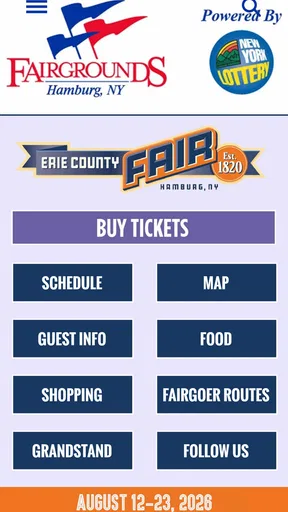
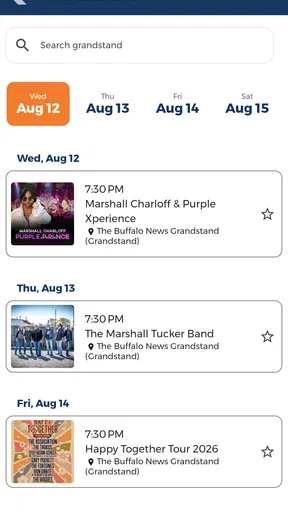
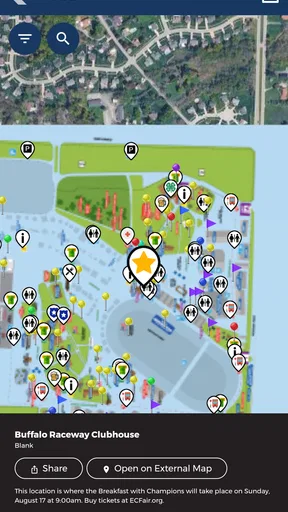
 Analysis by AppCompare
I found Hamburg Fairgrounds most useful when I treated it as a companion for planning a visit rather than as a complete replacement for every fairground resource. This free Events app brings together the Erie County Fair, Buffalo Gaming, and Hamburg Gaming under the Hamburg Fairgrounds name, with the Erie County Agricultural Society behind it. That focus matters: instead of being a general event-discovery tool, it is aimed at people who already have a reason to visit these venues and want related information in one place.
My first impression was that its value depends heavily on timing. Before heading out, I would use it to orient myself around the event and decide what information I need to check. Once I am already on the grounds, a phone-based guide can be handy, but only if the relevant details are easy to locate quickly and remain readable in changing conditions. That makes clarity and navigation just as important here as the amount of information available.
The app has a 4.1 average from around 27 ratings, and it has passed 10 thousand installs. Those figures suggest a modest but established audience rather than a huge mainstream service. It is free, rated for Everyone, and the current release is version 3.0.0. I would therefore see it as a low-risk download for a fair visitor, especially someone who wants an official venue-focused starting point without paying for access.
How Hamburg Fairgrounds works for different visitors and situations
I find that the most useful way to think about Hamburg Fairgrounds is as a planning aid that can be adapted to different visitors, rather than a tool everyone needs to use in the same way. A first-time guest, a family coordinating a day out, and someone who prefers to prepare quietly at home may each get different value from it. That distinction also helps set up a practical look at what can make using it easier or more demanding.
Readability and navigation before a visit
The strongest part of a venue-specific app is usually its narrow purpose. Hamburg Fairgrounds does not need to compete with a broad map, a social network, or a general ticket marketplace to be useful. Its job is to help people connect with the fairgrounds and the events associated with them. For me, that makes the first practical question simple: can I open it before leaving home and understand where to begin without already knowing the event structure?
I recommend opening the app while you still have time to prepare, rather than waiting until you are walking through a crowded entrance. A calm check at home gives you a chance to read the available sections, identify the information that matters to your group, and decide what you may need to remember. This is particularly helpful for families, older visitors, and anyone who finds it tiring to process information quickly in a noisy public setting.
One useful habit is to separate planning from live use. Before the trip, I would look for the details that affect the whole day, such as what I want to attend or which venue information is relevant. During the visit, I would use the app only for short checks. That approach reduces the need to scroll through every section while standing in a queue, and it makes the experience less dependent on fast reading or perfect concentration.
Worth Reading Before You Choose

EA SPORTS FC Mobile 26 Is a Bigger Football Game, but It Takes Time

Flipboard Shows What News Apps Must Do Beyond the Feed

Switching to Android Auto Means Rethinking Your Driving Routine

Google Calendar Makes a Crowded Week Easier to Manage

Ludo King Makes the Most of the Minutes Between Plans

Baby Panda World Brings Quick Play to Modern Phones, but Its Game Library Feels Busy
The app’s official connection to the Erie County Agricultural Society is also meaningful for trust. A venue-focused source is generally more relevant than relying only on search results, social posts, or old screenshots shared by another visitor. At the same time, I would still read each screen carefully instead of assuming that every item applies equally to the Erie County Fair, Buffalo Gaming, and Hamburg Gaming. The three names point to related destinations, but a visitor should confirm that the information on screen matches the event they are actually attending.
For readability, the real test is not whether the app looks attractive in a quick glance. It is whether a person can find a needed detail after being distracted, interrupted, or handed the phone by someone else. I would judge it by the number of steps required to answer practical questions and by how clearly sections distinguish one venue or event from another. If a relative is using the app independently, I would let them explore it before the visit and see whether the labels make sense without my explanation.
Motor and sensory considerations in real use
Fairgrounds are demanding environments for phone use. People may be carrying food, bags, coats, or a child while trying to operate a screen with one hand. They may also be moving through crowds, standing in bright sunlight, or dealing with music and announcements. In that setting, an app can be technically available yet still difficult to use. My practical advice is to prepare the important information before entering the busiest areas and avoid making the phone the only way your group knows what to do.
For visitors with limited dexterity, short sessions are easier than constant interaction. I would avoid trying to navigate several layers while walking. Stop somewhere stable, hold the phone securely, and complete one task at a time. If another person in the group has steadier hands or better vision, sharing the planning role can make the app more comfortable without taking away the visitor’s independence.
People with visual sensitivities may also prefer to adjust the phone itself before using the app. Increasing system text size, changing brightness, or enabling a device setting that reduces glare can help, although the result will depend on how the app responds to those settings. I would test this at home. A display that feels comfortable indoors may become harder to read outdoors, especially when the screen reflects sunlight.
For visitors who are sensitive to sound, the app’s usefulness is that it can move some planning away from the loudest parts of the fairgrounds. I would use it in a quiet room before leaving and write down or otherwise retain the few details that matter most. That way, the phone supports the visit without requiring someone to repeatedly open it near rides, stages, crowds, or busy food areas.
There is also a cognitive benefit to reducing choices. Rather than asking a visitor to browse everything, I would identify one or two priorities: a particular event, a venue detail, or a meeting plan. This creates a simple workflow that is easier to follow when attention is divided. The app can be part of that workflow, but it should not become another source of decisions.
Situational access for families and groups
A realistic example would be a family preparing for a day at the Erie County Fair. One adult could explore Hamburg Fairgrounds at home, check the sections connected with the visit, and make a short plan with the children. Another adult could keep the phone available during the outing. If the group separates, they would benefit from agreeing on a meeting point in advance instead of assuming everyone can instantly use the app to find one another.
This matters because a fairground app and a navigation app serve different purposes. A general map may be better for driving directions or locating nearby services, while the official app is more likely to be useful for venue-specific context. I would use each tool for what it does best rather than expecting Hamburg Fairgrounds to replace maps, messages, calendars, or personal notes.
The same principle applies to Buffalo Gaming and Hamburg Gaming. Someone visiting one of those locations should begin by identifying the correct destination inside the app, then ignore unrelated sections unless they are genuinely useful. This sounds obvious, but it prevents a common problem with multi-venue apps: a visitor sees a familiar name and assumes every screen applies to the current place.
For an older family member, I would set up the app together and explain the basic route through it in plain language. I would not assume that a free app is automatically simple for everyone. The best arrangement may be for that person to use the app for one specific purpose while another family member handles broader planning. This preserves useful independence without forcing them to learn every part of the interface on a busy day.
Visitors who need a slower pace can also benefit from checking information before departure. If the app helps them understand the event context early, they can plan breaks, decide when to arrive, and reduce last-minute searching. I would not rely on it alone for urgent decisions, though. A phone battery, network conditions, crowd density, and distractions can all affect how practical live browsing feels.
Where the usual alternatives may be better
Hamburg Fairgrounds makes the most sense when the question is tied directly to the Erie County Agricultural Society’s venues and events. A general search engine is faster for broad questions, a maps app is usually more suitable for route planning, and a calendar app is better for tracking personal appointments. Social media may offer current visitor conversation, but it can be inconsistent and difficult to scan. The official app’s advantage is its focused relationship with the fairgrounds rather than its ability to do everything.
I would choose a general map first if my main concern were getting to Hamburg Fairgrounds, estimating a drive, or checking nearby roads. I would choose a personal notes app if I needed a custom checklist for medication, sensory breaks, meeting points, or items for children. Hamburg Fairgrounds fits between those tools: it can provide venue-oriented information, while the other apps handle personal logistics more effectively.
That division of labor is especially important for inclusive planning. A person with mobility, sensory, or communication needs may require a detailed personal plan that no event app can create automatically. I would use Hamburg Fairgrounds as one information source, then add my own reminders and backup arrangements. This is not a criticism of the app so much as a realistic boundary for any venue guide.
Remaining barriers and practical workarounds
The biggest potential barrier is dependence on the phone at exactly the moment when phone use is least comfortable. Bright light, noise, movement, low battery, or crowded walkways can turn a quick lookup into an irritating task. My workaround is to review the app in advance and keep the number of live checks low. If a detail is essential, I would retain it in a simpler form as well, such as a note or a message to the group.
Another barrier is the difference between information being present and information being easy to act on. A visitor may still need to compare sections, interpret event wording, or decide which venue applies. I would not hand the app to a child or a first-time visitor without explaining the basic context. A short orientation from someone familiar with the plan can make the app much more accessible than leaving the user to decode it alone.
People who need highly personalized accessibility information should approach the app as a starting point, not a guarantee that every question will be answered on screen. I would prepare specific questions before visiting and look for the clearest official route to resolve them. The app is valuable when it reduces uncertainty, but personal requirements may still call for direct confirmation or a separate plan.
The app is also not the right choice for someone who wants a broad events calendar across an entire region. Its identity is tied to Hamburg Fairgrounds and the associated Erie County Fair, Buffalo Gaming, and Hamburg Gaming destinations. If I were comparing many unrelated events, I would use a general event service instead. Downloading this one makes sense when the fairgrounds themselves are the destination.
Its modest audience size may also affect how much community guidance a visitor expects. I would not choose it because I want extensive user discussion, crowdsourced tips, or a large review ecosystem. I would choose it for its official venue focus and keep my expectations centered on practical event support.
My inclusive verdict on the fairground companion
After considering how it fits different abilities and environments, I see Hamburg Fairgrounds as a useful, focused tool for visitors who want an official digital connection to the fairgrounds. I like that it is free, carries an Everyone age rating, and is maintained by the Erie County Agricultural Society rather than being a generic guide with no clear venue identity. The current version, 3.0.0, gives it a straightforward reason to be considered by someone preparing for a visit.
My main recommendation is to use it before the event, not depend on it for every moment of the day. That single change improves the experience for people who read slowly, tire easily, dislike noisy environments, have limited hand mobility, or simply do not want to hold a phone while navigating a crowd. Prepare at home, narrow the information to what your group needs, and keep a backup plan for the details that matter most.
I would recommend it to Erie County Fair visitors, people checking information connected with Buffalo Gaming or Hamburg Gaming, and families who prefer an official venue-specific resource over scattered online results. I would also recommend it to anyone who wants to explore the fairgrounds’ event context before arriving and is comfortable supplementing the app with maps, notes, or group messages.
I would skip it if I needed a complete regional event directory, a dedicated navigation tool, or a deeply personalized accessibility planner. In those cases, another app will probably do the central job better. Hamburg Fairgrounds is more useful when it is one part of a thoughtful visit plan than when it is expected to solve every logistical problem.
Overall, I found the app worth keeping in mind because its focused purpose can reduce some of the friction around visiting the Erie County Agricultural Society’s venues. It will not remove the physical and sensory challenges of a busy fairground, and it should not be treated as a substitute for personal preparation. Used with realistic expectations, though, Hamburg Fairgrounds can give visitors a clearer starting point and help different members of a group prepare in a way that suits them.
Pros
- Convenient location with strong public transport connections.
- Large
- modern halls can accommodate major international events.
- Wide range of trade shows
- conferences
- and public events.
- On-site catering and visitor services improve event-day convenience.
- Professional venue infrastructure supports exhibitors and organizers.
Cons
- Busy events can make entrances
- corridors
- and restrooms feel crowded.
- Parking may be expensive or limited during popular exhibitions.
- The large complex can require considerable walking between halls.
- Food and drinks inside the venue may cost more than nearby options.
- Event quality and available facilities vary depending on the organizer.
FAQs for Hamburg Fairgrounds
What is Hamburg Fairgrounds, and what can I use the app for?
Hamburg Fairgrounds is a practical companion for visitors attending exhibitions, trade fairs, conferences, and other events at Hamburg Messe und Congress in Germany. It can help you explore event information, check schedules, find exhibitors, view venue details, and plan your visit more efficiently. Its usefulness may depend on the specific event, since available content and features can change between fairs.
Can I use Hamburg Fairgrounds to find exhibitors, booths, and event locations?
Yes, one of the most useful purposes of Hamburg Fairgrounds is helping visitors navigate the exhibition grounds. Depending on the event, you may be able to search for participating companies, review exhibitor profiles, locate stands on an interactive map, and identify halls or entrances. This can save time, especially during large events where finding a particular booth on foot may otherwise be difficult.
Does Hamburg Fairgrounds require an internet connection?
An internet connection is generally recommended because event programs, exhibitor information, announcements, and maps may be updated during the fair. Some information might remain accessible after it has loaded, but you should not assume that every feature works offline. Before arriving, open the app and download or review the relevant event content, particularly if mobile coverage or roaming could be unreliable.
Is Hamburg Fairgrounds free to download and use?
The Hamburg Fairgrounds app is typically available as a free download, although individual events may have their own admission rules, registration requirements, or paid tickets. Installing the app does not necessarily provide entry to a trade fair or conference. Check the event’s official details for ticket prices, access conditions, and whether certain digital features require registration or an exhibitor-specific account.
Is Hamburg Fairgrounds useful for visitors attending a large trade fair?
Yes, the app can be especially helpful at busy events because it brings schedules, venue information, exhibitor details, and navigation tools together in one place. It can help you organize meetings, discover relevant companies, and avoid unnecessary walking between halls. However, features vary by event, so it is wise to confirm that your particular exhibition is supported before relying on the app as your only source of information.


